

Super Bowl 2026 Commercials We’re In Love With
Written by Alexa McDonald
The Big Game 2026 was earlier this month. Let’s be honest—at HAVEN, the majority of our Mavens were watching for the commercials. With some brands producing AI slop and relying too heavily on celebrity endorsement (we’re looking at you, Dunkin’), the ads that used fresh creativity had us falling head over heels for their advertising genius.
Here are the ads that we loved the most and why they stayed with us:
1. Liquid Death: New Energy Drink
Liquid Death rolled out its new energy drink during the Big Game. The commercial features a “Doctor” speaking to the relatable pain point: most energy drinks have way too much caffeine. But they did it in a totally on-brand way, showing "heads exploding" to make their point, then listing the features of this new energy drink.
Why we love it: It works because it uses "The Jester" archetype to highlight a real product benefit. It's memorable because it’s bold, on-brand and solves a pain point, introducing an alternative energy drink.
Watch it here: https://youtu.be/tEh050NGnVM?si=3dS8arK1ASwawFKM
2. Squarespace: “Unavailable” featuring Emma Stone
This commercial was dramatic, funny, and out-of-the-box. Emma Stone searches hopefully for “emmastone.com” on Squarespace, and breaking laptops each time she sees that the domain is unavailable. To push the campaign even further, emmastone.com is a real landing page with a direct message from Emma Stone, honing in on the message “Don’t be like Emma, get your domain today before it's too late.”
Why we love it: Relatability is the ultimate hook. They zeroed in on a relatable pain point: trying to get a domain name that's already taken, and turned it into a cinematic event. They used an Oscar-winning actress to give a simple concept a creative twist. Stellar!
See it here: https://youtu.be/NHuBiLk_A04?si=-qfDObNTuUQGHL1R
3. Bosch: “Justaguy” featuring Guy Fieri
Guy Fieri partnered with Bosch to play "Justaguy"—a version of himself that was clean-shaven and conservatively dressed. The ad shows how using Bosch tools transforms him back into his signature, spiky-haired persona.
Why we love it: This is a perfect "Hero" story. The commercial positions Bosch products as the catalyst that helps customers become their best, most badass selves. It also plays into novelty and humor, seeing an iconic figure like Guy Fieri completely transformed into a “regular” guy, making for a memorable spot.
Check it out: https://youtu.be/NIbs8I3WWlM?si=s3uT8sqJyXIoNZR3
4. Lay’s: “Last Harvest”
This emotional ad follows a father-daughter potato-farming team as they walk down “memory lane” for one last harvest together before the father retires. It ends with him handing the keys off to his daughter, and the message: “Real potatoes grown by generations of farmers across North America.”
Why we love it: This commercial had just the right amount of emotional connection to tug at your heartstrings while delivering a powerful brand message. It was a heartfelt look at the people behind the chips, building trust by showing the authentic, human side of a massive brand.
Watch: https://youtu.be/EBnLXlvrNng?si=od4BuONBtTN3IKZH
5. Pringles: “Pringleleo” featuring Sabrina Carpenter
Pop-star Sabrina Carpenter builds her soulmate, "Pringleleo," out of Pringles after lamenting that she is tired of boys and wants a man. We witness their relationship unfold with humorous snippets of their blissful romance. It ends with Sabrina eating the remains of her "beau" after her fans crush him.
Why we love it: It’s chaotic, fun and totally on-brand for both Pringles and Carpenter. It appeals to a younger audience by not taking itself too seriously while keeping the product at the center of the story, featuring a highly popular celebrity with an infectious personality.
Watch it here: https://youtu.be/pEYkM3boSos
The Bottom Line
Great advertising isn't accomplished with just a big budget or gimmicks; it’s about novel ideas that connect with a real audience. If this year’s commercials taught us anything, it’s that creativity and connection trump sloppy AI and forced relatability every time. Whether it’s through humor or heart, these brands showed how to get sh!t done.
Looking for branding, advertising or strategic communications support? Call HAVEN! We aren’t just fans of great work; we create great work that connects. Partner with us today.


Why Brand Alignment is the Secret to a High-Performance Customer Experience
In today’s industrial world, Customer Experience (CX) is a major focus. Whether you are manufacturing heavy equipment or selling truck accessories, your customers expect more than just a quality product. They expect a seamless journey from the first click to the final delivery.
However, many organizations get this backward. They try to fix their CX before they have defined their brand. At HAVEN, we help businesses use their unique branding to influence their customer experience across all touchpoints.
The Gap Between Promise and Delivery
We often see growth-focused companies jump straight into automation or new software to "improve CX". But if your brand identity is unclear, you are just delivering confusion at a faster pace.
Think about the various touchpoints your customers encounter:
- The tone your sales team uses during a discovery call
- The clarity and helpfulness of your technical guides
- The ease of finding specific solutions on your website
If your marketing makes a promise that your customer journey cannot keep, you have a branding problem.
Signs Your Brand and CX are Out of Sync
Before you can fix the disconnect, you have to find it. Bridging the gap between branding and CX requires looking at your business through the eyes of your customer. Here are a few ways to identify if your brand strategy is stalling your experience:
- Inconsistent Voice: Does your marketing sound fun and friendly, but your technical support feels cold and corporate?
- Broken Trust: Are you promising "innovation" while providing outdated installation instructions or hard-to-navigate websites?
- The "Wait" Factor: Is your brand promise focused on speed while your response times are slowing your customers down?
- Team Misalignment: If you asked your sales and marketing leads to define your brand in one sentence, would they give different answers?
The best practice for bridging this gap is simple: Audit your customer journey against your brand pillars. Every interaction should reinforce who you are and what you promise.
The Maven Method: Align, Design and Deliver
HAVEN Creative helps businesses align their teams so that the internal brand matches the external experience. We use a proven framework to help you get sh!t done:
- Develop: Clarify who you are and what you stand for so your team stays aligned
- Design: Build the creative assets and communication tools that reflect your unique voice
- Deploy: Launch data-driven campaigns that turn one-time buyers into loyal partners
Stop Guessing and Start Connecting
Your customers are looking for a trusted partner who speaks their language. When your brand strategy and your customer experience are in sync, you build a competitive advantage that is hard to beat.
Get the insights you need to take your brand to the next level with the Brand Growth Assessment. In just 5 minutes, you’ll get a personalized report on what areas of your branding need improvement so that you can grow your business.
Ready to align your brand strategy and improve your customer experience? Get in touch with a Maven.
The Most Memorable Marketing Campaigns of 2025
In the current marketing ecosystem, simply pushing advertisements isn't enough. We’ve heard the staggering estimates—consumers are bombarded with thousands of ads daily. With brands fiercely competing for attention across every channel, injecting creativity into your strategy is mandatory.
As 2025 wraps up, we’re taking a deep dive into the marketing efforts that left a mark. Last year, we shared our favs from 2024, but this year's lineup sets a whole new benchmark for creativity and impact. Our criteria is simple: if it stuck in our minds after 12 months of constant noise, it made the list.
The Top 5 Campaigns That Captured Attention in 2025
The campaigns that defined 2025 weren't accidental viral hits; they were products of intentional, data-driven strategy and a willingness to be bold. They commanded attention, fostered emotional connections and made themselves impossible to scroll past. Here are the top 5 most memorable campaigns from 2025, according to HAVEN Creative.
1. State Farm’s “Bateman vs Batman” Commercial
- Campaign Concept: State Farm paired star Jason Bateman with the iconic DC Comics persona, Batman for this cimematic commercial, stating that you wouldn’t settle for Bateman in place of Batman, just like you shouldn’t settle for insurance that isn’t State Farm.
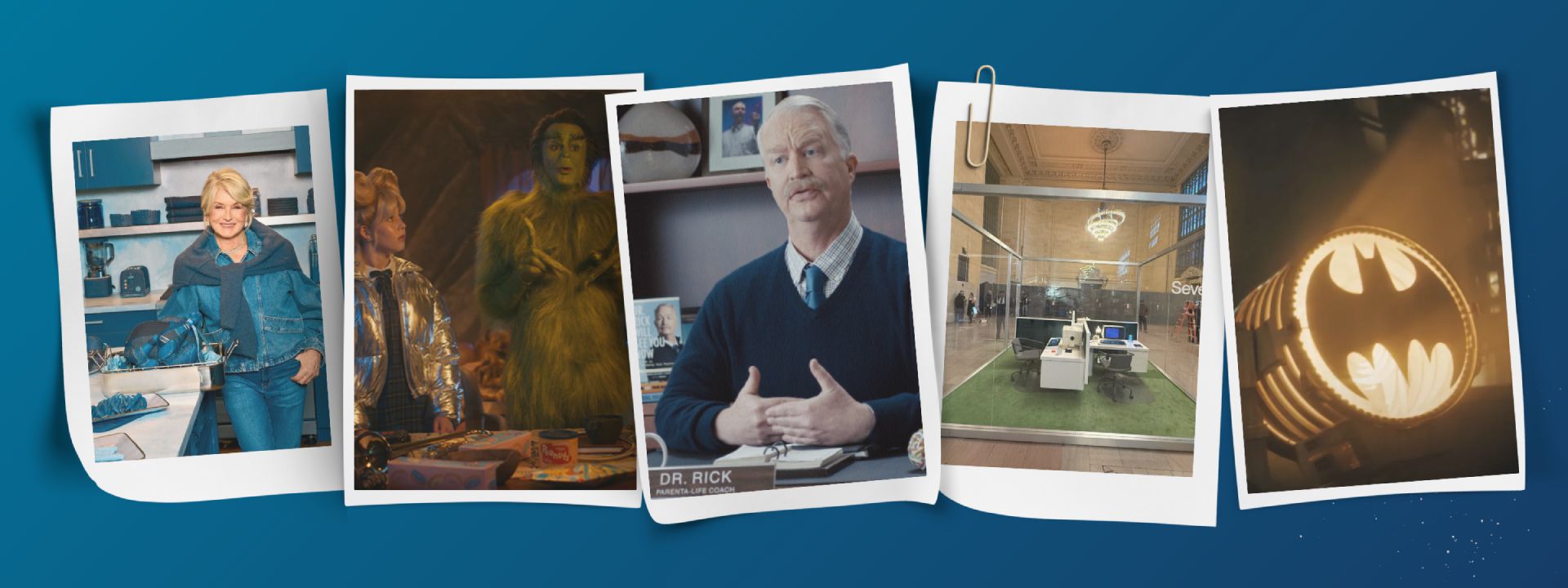
- Why It Worked: This campaign leveraged pop culture for an immediate attention grab. Placing a beloved, recognizable actor in an unexpected superhero role generated instant buzz. It capitalized on influence by including other star power like pop-singer SZA as Cat Woman and popular streamer Kai Cenat, among other celebs. It’s a masterclass in using humor and shared cultural context to position the brand's services as both dependable and memorable.
2. Apple TV’s Severance - “The Cube” by Kamp Grizzly
- Campaign Concept: Apple TV promoted the new season of its smash hit show Severance in an unconventional way. They placed a glass office cubicle in New York’s Grand Central Terminal, where passerby could watch actors Adam Scott, Britt Lower and Zach Cherry completing office tasks as their Severance characters.
- Why it Worked: The performance went viral, demonstrating the power of immersive, experiential marketing. It pays off to think outside of the box.
3. Dr. Rick from Progressive
- Campaign Concept: This ongoing campaign features "Parenta-life coach" Dr. Rick, who steps in to guide young homeowners away from the embarrassing habits of their parents, a condition referred to as "Parentamorphosis". Although this campaign started years ago, it still shines through with fresh advertisements throughout 2025.
- Why It Worked: The brilliance lies in its consistency and humor. The campaign masters relatability, using shared, humorous human behaviors to deliver a straightforward pitch for bundling home and auto insurance. The joke is the hook, and the value proposition is the payoff: Progressive can't fix your questionable parenting future, but they can save you money.
4. American Eagle’s “Give Great Jeans” Campaign featuring Martha Stewart
- Campaign Concept: American Eagle took an unexpected turn for the holidays, hiring 84-year-old lifestyle guru Martha Stewart for their "Give Great Jeans" campaign. This move followed a July 2025 controversial campaign featuring Sydney Sweeney that received significant online backlash.
- Why It Worked: This was a masterclass in strategic pivoting and generational marketing. By choosing an established, multi-generational icon like Stewart, the brand executed a reset, immediately injecting a sense of warmth and humor while capitalizing on Stewart's unexpected resonance with Gen Z. The strategy successfully positioned the jeans as a gift that "bridges generations" and drove immediate buzz.
5. Walmart’s “WhoKnewville”
- Campaign Concept: Walmart’s "WhoKnewville" campaign features a whimsical, Dr. Seuss-inspired world, starring Walton Goggins as The Grinch, to generate massive buzz and connect with audiences emotionally during the holidays. They seamlessly linked that nostalgia and humor to shoppable moments by having Mindy Lou Who use the Walmart App to find high-end gifts like Apple and Nespresso.
- Why It Worked: The campaign’s success proves that when you root high-impact creative in a consistent, long-term brand platform (like their ongoing “Who Knew?” campaign), you don’t just win hearts—you move the needle on sales. This strategic approach positions the brand as a modern, full-service retail destination.
Key Takeaways for Marketing Mavens in 2025
A few critical lessons emerge from this year’s top campaigns that set the standard for success:
- Humor is a Universal Language: Campaigns like Dr. Rick show that humor and a sustained brand voice builds brand consistency and is incredibly effective at penetrating market noise.
- Ride the Cultural Wave: The success of State Farm and American Eagle proves that leveraging cultural relevance—whether through timely celebrity partnerships or viral moments—is a fast way to generate massive organic engagement.
- Experiential Marketing Drives Buzz: Apple TV’s "The Cube" demonstrated that immersive, experiential marketing can instantly go viral, commanding attention and making the brand impossible to scroll past.
- Challenge Assumptions: Walmart demonstrated the strategic value of re-educating your audience. Don't assume your customers know everything you offer; sometimes the most effective campaign is the one that surprises them.
What's Next for Marketing Strategies in 2026?
2025 has raised the creative bar significantly. Looking ahead, here’s what we at HAVEN Creative expect to drive results in 2026:
- Unexpected Collaborations Will Trend: Following the success of unlikely pairings like American Eagle and Martha Stewart, brands will increasingly look for non-obvious partnerships to break through the noise and drive buzz.
- Immersive Experiences Will Scale: Expect brands to move beyond traditional advertising and invest in more immersive, physical or virtual experiences that create instant, shareable buzz, following the lead of Apple TV’s "The Cube."
- Gamified Marketing for Engagement: Expect interactive and gamified content to become a standard tool for audience engagement and education.
Partner with HAVEN to Create a Memorable Marketing Campaign
If you're ready to stop guessing and start growing, HAVEN is here to help you get sh!t done. Our team of Mavens specializes in crafting strategic, creative and memorable campaigns that capture attention and deliver tangible results. We don't sell buzzwords or B.S.—just results.
Let’s bring your next big idea to life. Book a consultation with our creative experts today.

The Impact of AI on Marketing
How AI is Impacting the Marketing Landscape
Let's be candid: "AI" is the most overused and overhyped buzzword of today. But behind the noise, Artificial Intelligence is fundamentally changing the marketing landscape, and it’s moving faster than an over-caffeinated ostrich.
For marketers, AI presents a massive opportunity. It’s a chance to automate the mundane, get hyper-specific with data and (in theory) get more sh!t done. But it also presents a core challenge: how do we use it without losing our strategy, our creativity or our minds?
If you're in an industry like automotive, you might be feeling extra pressure. Leadership sees AI as a magic wand to slash budgets, expecting you to "just use AI" and deliver the same (or better) results with fewer resources. But as we know, a tool is only as good as the strategy behind it.
The Benefits of AI in Marketing
When it’s not being used as a budget-slashing excuse, AI can be a powerful partner for marketing teams.
The real win is in automation. AI can free up your team from time-consuming, data-heavy tasks, allowing budget and brainpower to be reinvested where they matter: in creative endeavors and big-picture strategy. But here’s the catch: for AI implementation to lead to real revenue growth, it must be guided by a strong, human-led strategy.
Marketing Automation and Acceleration
Think about all the error-prone, time-sucking processes you deal with. AI tools are built to accelerate them. Take your CRM, for example. AI can improve your customer relationship management by automatically cleaning, segmenting and preparing customer data. This cuts down on human error and dramatically improves your ability to personalize outreach.
AI Marketing Tools and Improved Data Insights
Digital campaigns produce a mountain of data. Most teams are so busy running the campaigns that they can’t possibly keep up with the analysis. AI tools can sift through that data in seconds, identifying patterns and serving up actionable insights that would take a human analyst days to find.
Content Generation
Generative AI platforms can be fantastic time-savers for drafting emails, subject lines and social media updates. But you can't just copy, paste and send it. The key is finding the balance between AI efficiency and human collaboration. Your customers crave authentic, personalized interactions, not a robot recycling the internet. Be transparent, be personal and engage with your audience authentically.
Revenue Growth
Here's the bottom line: AI reduces the time and cost associated with low-level administrative and analytical tasks. This saves money. The smart move isn't to pocket those savings—it's to reinvest them back into your marketing strategy. As research from PWC found, "a strategy of reinvestment, efficiency and effectiveness is 2x more profitable than one of short-term savings".
The Current Challenges for Marketing in The Age of AI: Does Constraining Budget Constrain Growth?
Yep. For many businesses, the promise of AI looks like an easy way to trim budgets without (supposedly) compromising productivity. This is a trap.
Budget Cuts
Simply cutting your marketing budget because "AI can do it" will not improve your returns. It will constrain your growth. AI accelerates processes, but it doesn't create strategy. Without a solid, well-funded strategy, you’re just accelerating in the wrong direction. This is where an agency partner comes in to orchestrate that growth and ensure your tools are working for your strategy, not in place of it.
Overreliance on AI Automation
Relying on GenAI to create your content or your strategy leads to a bland, impersonal and ineffective brand. AI doesn't understand your brand's soul. It can't build a holistic strategy that accounts for market nuances and human emotion. Overreliance on automation alone leaves you vulnerable, and dare we say, boring.
AI Misuse
Misusing AI can come back to haunt you. AI models are known to "hallucinate" or confidently state false information. Imagine building a strategy on bad data—it’s a recipe for disaster. This is the critical difference between an AI-generated "strategy" and the bespoke, deeply researched services HAVEN provides.
Privacy Concerns & Ethical Considerations
The rules around AI and data privacy are still the Wild West. When your team pastes customer data into an open-source AI tool, that data is out there, potentially accessible to competitors. Good data governance is no longer optional. Furthermore, AI models can have inherent biases, and AI-generated content poses a real threat to creative industries. Balancing AI automation with human-generated content isn't just good strategy; it's good ethics.
Optimising your AI Marketing Strategy Without Constraining Growth
Here’s the truth: marketing can absolutely benefit from AI. The key is to use it to free up your team’s resources for more creativity, innovation and big-picture thinking.
The success of AI is 100% dependent on the strength of your strategy. It’s a powerful tool, but it's not a magic wand.
Navigating marketing in the age of AI can be a challenge, but you don't have to do it alone. At HAVEN Creative, we help businesses like yours build bulletproof strategies that harness the power of new tools without being misled by hype.
Ready to stop guessing and start growing? Let's GSD.

Customer Persona vs. Buyer Persona: What’s the Difference? (And Why It Matters)
"Customer persona" and "buyer persona" often get thrown around in marketing meetings. But have you ever wondered what they really mean… and how to even use them? Knowing the difference and applying these personas is key to effectively engaging your ideal customers and growing your business.
So, let's break down what these phrases really mean, why you need both and how to use them to level up your strategy.
What's the Difference Between Customer Profiles and Buyer Personas?
Think of it like this: your buyer persona explains who buys your product or service, while your customer persona illustrates who uses it.
Focus
- Customer Persona:This is the end user of your product or service. They’re all about the experience, the lifestyle fit and whether you’re meeting their needs. We’re talking customer satisfaction and loyalty, and how they engage with your brand
- Buyer Persona:This is the decision-maker (the one with the company card). Especially in B2B or family purchases, this persona is focused on pain points and buying motivations
Purpose
- Customer Persona:This is your go-to for making your product or service better. It informs UX (user experience), customer service and post-sale communications. It helps your team get clear on how customers use your product or service
- Buyer Persona:This helps your marketing and sales teams shape messaging and campaigns that convert. It’s used to understand how to position products/services during the purchase journey
Content
- Customer Persona:Includes psychographic details. We’re talking hobbies, lifestyle, personal goals and how your product fits into their world
- Buyer Persona:Includes professional background, decision-making power, challenges in their job, buying triggers and KPIs that keep them up at night
Examples
- Think "Eco-conscious Emma," a 30-something who's all about sustainability and uses your product daily
- Meet "Procurement Peter," a facilities manager responsible for choosing suppliers who deliver cost savings and meet compliance requirements
How to Integrate Customer Personas with Buyer Personas
Having both is a must. Making them work together is game-changing. Here’s how to make it happen:
Collect Data for Both:
- Use surveys, interviews, CRM (Customer Relationship Management) data and user feedback
- Make sure to collect behavioral data from users and sales data from buyers
- Include cross-functional insights from customer service, sales and marketing
Create Unified, Detailed Personas
- Map overlapping traits and distinct needs into one shared documentation system
- Use templates to compare personas side-by-side
- Ensure all teams are aligned in their understanding of each type of persona
Apply the Integrated Personas in Your Strategies:
- Show how content creators, product designers and sales teams can use both sets of personas to improve outcomes
- For example, design teams focus on customer personas, while marketing campaigns use buyer personas for ad targeting
To learn more about creating customer personas, check out this blog post.
The Benefits of Using Different Personas
Fosters Empathy and Understanding
- Helps internal teams step into the shoes of both the user and the buyer
- Builds emotional intelligence into your product and marketing strategy
Aligns Teams and Improves Communication
- Get everyone on the same page and speaking the same language
- Marketing, sales, product and service teams can work with clarity on who they're targeting and why
- Reduces friction and misalignment in strategy execution
Guides Decision-Making
- Data-backed personas help teams prioritise features, campaigns and product development
- Ensures investments align with what real people need and want
Supports Marketing and Branding
- Enables personalised, segment-specific messaging
- Enhances brand consistency and engagement across channels
Helps Prevent Design Pitfalls
- Avoid the "one-size-fits-all" trap during product development
- Leads to better UX and products people actually want to use
The Bottom Line
Customer personas and buyer personas are part of your journey to a smarter, more effective marketing strategy. Understanding the difference and using them together is how you create a seamless brand experience from the first click to forever-fan status.
Want help creating personas for your business? The HAVEN Mavens are here to help you GSD. Get connected today.

How to Reach Your Target Audience Successfully
So, you’ve got a killer product or a game-changing service. But how do you make sure it reaches the right people?
Nailing your audience targeting means a better ROI, stronger brand loyalty and conversions that grow your business. It’s essential for any marketing strategy. Ready to stop guessing and start connecting? Let’s dive in.
Why Is Reaching Your Target Audience Essential?
Casting a wide net is great for fishing, but in marketing, you’re wasting a whole lot of time, energy and resources. Identifying a target audience helps you cast your net where the best fish (i.e., customers) are. This saves you money, sharpens your message and builds a loyal community around your brand. Here's the breakdown:
- Effective Communication:When you know who you're talking to, you can speak their language and connect to their needs and values. Tailor your tone and content to align with your audience and watch the magic happen. For example, millennials might want your casual, value-driven side, while B2B pros want straightforward data-driven solutions.
- Improve Your Offerings:Understanding your audience’s pain points and desires gives you a direct line to feedback that can improve your products or services.
- Stronger Customer Relationships:Personalized, relevant communication builds trust and loyalty. When your audience feels seen and understood, you're not just a brand but a trusted partner.
- Get a Competitive Edge:Stand out from your competitors by being the go-to brand for your specific audience. Owning your corner of the market is how you win.
- Build Connections:People don’t connect with faceless corporations. They connect with stories. Authentic storytelling forges a bond that turns one-time customers into lifelong fans who help spread your message and grow your business.
- Direction for Strategy:Knowing your audience guides your decisions on content, marketing channels and overall brand direction, ensuring you're always on the right track.
Strategies to Reach Your Target Audience (The GSD Part)
Ready to get to work? Here are the no-B.S. strategies you can use to connect with the people who matter most.
- Define Your Target Audience:Dig into psychographics and behavioral analysis. Conduct market research, surveys and competitor analysis to get the full picture. For more details, check out our blog post on how to find your target audience.
- Create Engaging and Relevant Content:High-quality, valuable content builds trust and attracts the right crowd. Give them something they can use or enjoy, and they'll keep coming back for more.
- Go Where They Are:Don't waste your time on platforms your audience doesn't use. Gen-Z? Think Instagram and TikTok. B2B professionals? LinkedIn. And don't forget the power of email for direct connection. Paid ads and retargeting will help your brand stay top-of-mind for your audience.
- Stay Connected With Your Audience and Adapt:The conversation doesn't stop once you've hit "publish." Use surveys, feedback and social media to stay updated on market trends. And when you see a shift in their behavior (like a sudden obsession with video), be ready to adapt.
The Worst Ways to Reach Your Audience
Look, we've all seen it happen. Well-meaning brands waste resources in the name of "marketing." Knowing what NOT to do is just as important as knowing the right strategies.
- Chasing Every Trend:Just because everyone is doing a popular dance on TikTok doesn't mean your luxury brand should. Jumping on every trend can dilute your brand and confuse your audience. Stick to your core brand messaging to determine what trends to participate in.
- Providing Zero Value:If your content is a constant sales pitch, you're doing it wrong. Educate, entertain and solve problems. The sales will follow.
- Being Inauthentic:Clickbait, exaggerated claims and fake reviews are the fastest way to destroy trust. Be real, be honest and treat your audience with respect.
- Showing Up in the Wrong Places:Promoting your B2B software on TikTok instead of LinkedIn? That's a classic rookie move. Be where your audience is, not where you think you should
- Wasting Ad Spend:Poorly targeted ads are a quick way to drain your budget. Dial in your targeting and track your results to optimize your advertising.
- Not Monitoring and Measuring:If you don't analyze your campaign performance, you're doomed to repeat your mistakes. Use tools like Google Analytics, Meta Ads Manager or HubSpot to see what's working and what's not.
The Takeaway
Reaching the right audience is about consistent testing, authentic communication and a willingness to adapt to your audience. When you get it right, you build a lasting brand.
Ready to connect with your target audience and catapult to growth? The Mavens at HAVEN Creative are here to help you GSD. Let’s talk.

Top Trends Driving the Future of the Automotive Industry
The automotive industry is on the fast track to a major glow-up. From electric vehicles becoming the new norm to cars practically driving themselves, the changes are coming in hot and fast. It’s a whole new world out there, and for auto brands, keeping up is the only way to stay in the race. So, buckle up, because we’re about to take a joyride through the top trends that are steering the auto industry into the future.
Why the Automotive Industry Is Evolving Faster Than Ever
So what’s putting the pedal to the metal on all this change? Global supply chain shake-ups have forced everyone to rethink manufacturing. The massive shift to electric vehicles (EVs), changing consumer demands and a heavy focus on sustainability are creating new pressures. Add a dash of digital disruption, and you have an industry evolving at warp speed.
Key Automotive Industry Trends to Watch in 2025
At HAVEN Creative®, we thrive in helping our partners become mavens in their fields. To get you started, here are the top automotive industry market trends you need to have on your radar for 2025.
Electrification and the Rise of EV-First Infrastructure
The EV revolution is here. With government targets pushing for cleaner energy and major investments in charging infrastructure, the future is electric. This affects everyone from original equipment manufacturers (OEMs) to aftermarket suppliers and service providers who must adapt their offerings for an electric world.
Supply Chain Innovation and Localised Manufacturing
The pandemic taught us that extended supply chains can be fragile. In response, brands are getting creative with solutions like reshoring, nearshoring and 3D printing. This move toward localised manufacturing is all about building agility and resilience to better navigate future disruptions.
Digital Sales Direct-to-Consumer and Online Marketplaces
The days of spending a whole Saturday at a dealership are fading. Consumers now expect to browse, buy and finance vehicles online. OEMs are shifting toward a direct-to-consumer (DTC) model while e-commerce for aftermarket parts and accessories is booming. A seamless digital sales experience is no longer a nice-to-have; it's a must-have.
Data-Driven Product Development and Personalisation
Data is the new horsepower. Brands must harness customer and vehicle data to create more personalized products, services and experiences. From customising vehicle features to offering tailored maintenance plans, data is helping both OEMs and aftermarket brands build stronger customer relationships.
Sustainability, Circularity and ESG Expectations
Modern consumers want more than just a great car; they want to support brands that are doing good for the planet. Green manufacturing, ethical sourcing and recyclability are becoming central to consumer expectations in the automotive industry. Strong environmental, social and governance (ESG) credentials are now a key driver of consumer choice and brand loyalty.
What These Trends Mean for Aftermarket and OEM Brands
Navigating these automotive industry trends in 2025 requires a strategic shift. Brands must be agile in positioning and embrace digital maturity to connect with today's car enthusiasts. This means exploring new revenue models and rethinking marketing priorities to highlight innovation and sustainability. Check out our recommended digital marketing strategies here.
How HAVEN Creative Can Help You Stay Ahead
The road ahead is full of opportunities for brands ready to embrace change. Now is the time to take action. At HAVEN Creative, we help you refine your branding strategy and modernize your marketing.
Ready to take the driver's seat? Contact us today to get started.

Top Customer Experience Trends Shaping the Automotive Industry
In the automotive industry, what makes a successful brand is changing. Today, it's all about who delivers the best customer experience (CX). At HAVEN Creative®, we see that CX has become the new battleground where brands win or lose. With customer expectations shifting and digital transformation accelerating, a top-notch CX is the new engine for growth.
Why Customer Experience is Becoming Central to Automotive Success
So, why is everyone suddenly talking about customer experience in the automotive industry? A great CX builds loyalty, creates a competitive edge and increases a brand's lifetime value. The focus is shifting from a purely product-based transaction to a service-focused brand experience that keeps customers coming back for more. Happy customers become your biggest fans, helping your brand grow. For a deeper dive on this topic, check out our blog about building brand loyalty.
Customer Experience Trends Reshaping the Automotive Landscape
Several key trends are set to redefine CX for original equipment manufacturers (OEMs) and automotive aftermarket brands.
Omnichannel Sales & Support:
- Customers expect a seamless experience between online and in-person
- OEMs: Virtual test drives and dealership-to-digital handovers
- Aftermarket brands: Online-to-in-store parts ordering and click-and-collect options, and partner networks
Self-Service & Personalisation:
- OEMs: Online financing tools and build-your-own configurators
- Aftermarket brands: Fitment tools, guided installation instructions, AI-powered Q&A or part match recommendations
Faster Fulfillment & Transparent Communication:
- In a world of on-demand everything, speed and transparency are key
- OEMs: Real-time order tracking and delivery status
- Aftermarket brands: Clear ETAs and communicating delays
Sustainability and Product Transparency:
- Today's consumers care about a brand's environmental impact, and being eco-conscious builds trust
- OEMs: Green vehicle rollouts or EV ecosystem
- Aftermarket brands: Ethically sourced materials, carbon-neutral shipping options or sustainable packaging
How to Improve Customer Experience in the Automotive Industry
Ready to become a maven of your own CX? Here are some practical ways to start making improvements.
Mapping the Customer Journey from Awareness to After-Sale Support
The first step is understanding every interaction a customer has with your brand. For aftermarket brands, this means looking at the entire journey from the initial search to checkout, installation help and post-purchase support. Everyone loves a good how-to video. Add helpful resources like installation videos and fitment tools to make the process smoother.
Using Technology to Streamline Shopping and Support
We live in the digital age, and technology is a game-changer for CX. Aftermarket brands can benefit from e-commerce integrations like fitment filters and live chat for instant support. Tools like CRMs and maintenance reminder systems can create a more seamless customer experience for OEMs.
Personalisation & First-Party Data Strategies
A one-size-fits-all approach no longer cuts it. Use the data you have to create personalized experiences. Aftermarket brands can send email flows based on past purchases or create vehicle-specific promotions. OEMs can offer tailored vehicle offers, use connected app features or service plan nudges to provide unique value.
Delivering Better Customer Experiences Starts with Strategic Action
Customer expectations constantly evolve, and the successful brands will put CX at the heart of their strategy. For aftermarket brands, it’s time to ask if your current CX is building loyalty or creating friction.
Our team at HAVEN is here to help you navigate the road ahead. If you’re ready to turn your customer experience into your competitive advantage, let's talk.

Rev Up Your Sales: Digital Marketing Strategies for the Automotive Aftermarket
The automotive aftermarket industry has *shifted gears* from traditional to digital marketing. It’s time to modernise your marketing approach! Ignoring this digital transformation is like trying to win a drag race with a golf cart. Slow and probably a little embarrassing. In this article, you’ll discover digital marketing strategies to help you improve brand reach and engagement and drive online sales. Pun intended.
Why Digital Marketing is Essential in the Automotive Aftermarket
Consumer behavior has changed dramatically, with online research and digital-first expectations leading the charge. When someone needs a new part or an upgrade for their ride, they hit up Google, scroll through social media, and scour reviews.
We're seeing a massive shift toward e-commerce for parts sales, B2B self-service portals for garages and distributors, and a general craving for digital engagement. If you're not where your customers are looking, you might as well be selling spare tires in a ghost town.
Core Digital Marketing Strategies Automotive Brands Must Use
Ready to put the pedal to the metal? Here are the digital marketing strategies that your auto aftermarket brand should start using today:
Content Marketing for Brand Authority
Create and share helpful resources like blog posts, how-to videos, and attractive infographics. Consistently sharing content that educates and informs positions your brand as a helpful expert, not just a vendor.
Social Media Marketing
Social media marketing amplifies your brand's visual identity and is key to connecting with your audience. Create visual content for Instagram, TikTok and YouTube. This can include photos or videos of your products, custom builds on Instagram, and in-depth product showcases on YouTube. Have fun humanizing your brand with behind-the-scenes glimpses and playful team content.
Pro tip: Engage with car communities and automotive influencers.
Search Engine Optimization (SEO)
SEO ensures that when someone types “best bumper for [their car model],” your brand pops up faster than your competitors. You do this by using the right keywords and optimizing your listings so Google and other search engines know you're the best fit for what people are seeking. Focus on targeting product-specific and long-tail keywords (those longer, more specific phrases people search for). Emphasize local SEO and optimize product listings.
Paid Advertising (PPC and Retargeting)
Pay-per-click (PPC) is a digital advertising model in which you pay a fee each time your ad is clicked. Platforms like Google Ads and paid social campaigns can put your brand directly in front of potential customers actively searching for what you offer. Ever notice how an ad for that thing you almost bought follows you around the internet? That’s retargeting, and it’s a cheat code for recovering abandoned checkouts and driving those cart recoveries home.
Email Marketing and Automation
Email marketing is a cornerstone of a solid digital marketing strategy. A key component of email marketing is segmenting your campaigns by buyer type—whether they’re DIY enthusiasts, professional garage owners, or distributors. Then send them highly relevant and personalized automated content: abandoned cart follow-ups, promotions, or reminders about product highlights.
Benefits of Going Digital for Aftermarket Companies
Digital marketing is often far more cost-effective than traditional print or radio ads. You get the superpower of real-time campaign adjustments. This leads to better ROI tracking and attribution, so you know exactly where your marketing dollars perform best. Ultimately, going digital is about future-proofing your brand in a competitive, fast-moving sector.
Digital Marketing Trends in the Automotive Industry
The digital landscape is constantly evolving, and staying ahead of the curve with the right strategies is like having nitro in your tank. Here are some current and emerging digital marketing trends that are shaping the automotive aftermarket sector:
- Growth in mobile-first campaigns: Everyone's got a smartphone in their pocket, and they're using it to research and buy. Your digital experience must be seamless on mobile.
- The rise of TikTok and YouTube for parts and performance content: These platforms aren't just for viral dances anymore! Use them to showcase products, offer tutorials and build community.
- Increasing importance of customer data privacy and first-party data: With changes in privacy regulations, collecting and leveraging your customer data (first-party data) is more crucial than ever for personalized experiences.
- Use of AR/VR in product demos or virtual garages: Imagine a customer "trying on" a new set of rims for their car using AR on their phone, or exploring a product in a virtual garage.
Staying ahead of these trends gives your automotive aftermarket brand a competitive edge.
Using Data & Analytics to Drive Better Results
Using data and analytics in digital marketing is like having a GPS for your sales journey. Instead of just driving around hoping to find customers, you've got real-time traffic updates.
- Google Analytics: Google Analytics is a powerful tool that allows you to dig deeper into data. For example, behavior flow reports reveal the path users take through your website.
- CRM Data: Your Customer Relationship Management software holds valuable information about customer interactions, purchase history, and demographics. This helps you understand repeat purchases and customer lifetime value.
- Heatmaps: Tools like Hotjar can show you where users click, scroll, and spend time on your website, giving you visual insights into their journey and pain points.
- Email Metrics: Analyze your email campaigns' open rates, click-through rates, and conversion rates.
Analyzing purchase paths helps you understand how customers find you and what motivates them to buy. This allows you to adjust your messaging and strategy for maximum impact.
Utilize customer segmentation, which lets you target specific groups with tailored messages, ensuring you always speak their language and create connections that build trust.
Want to learn more about reaching your target audiences? Dive deeper into crafting effective marketing by exploring our blogs on building customer personas and audience targeting.
Digital Marketing for Automotive Aftermarket Success
From building authority with killer content marketing and engaging on social media, to being found through search engine optimization and driving immediate sales with paid ads, these strategies are the blueprints for digital growth in the automotive aftermarket.
Ask yourself: Are we driving sales and building authority, or just spinning our wheels in the mud?
At HAVEN Creative, we're not about buzzwords or fluff; we're about thoughtful strategy that delivers measurable results. We love educating to empower our partners, turning marketing managers, brand leaders and business owners into true mavens of the digital landscape.
Ready to put your automotive aftermarket brand in the fast lane? Let's chat about how HAVEN Creative can support your automotive aftermarket marketing.
Book a strategy call with HAVEN Creative today!
Paid Media 101: How to Reach Your Target Audience with the Right Promotion
In today's competitive digital landscape, successful paid media isn't about spending more; it's about strategic targeting. Throwing money at ads willy-nilly is like playing darts without a target. High-performing paid campaigns are rooted in a clear understanding of your audience. When you know who you're trying to reach, and where and how to reach them, your advertising budget works better, delivering stronger results.
What Is Paid Media (and Why It Matters Now)
Paid media is any marketing channel where you pay to display your content, ads, or messages. This includes:
- PPC (Pay-Per-Click): Primarily search engine advertising (Google Ads), where advertisers only pay each time a user clicks on their ad.
- Paid Social: Advertising on social media platforms like Meta (Facebook, Instagram), LinkedIn, TikTok, X, etc.
- Display Advertising: Visual ads (banners, images) appearing on websites across the internet.
- Video Advertising: Ads shown before, during or after video content on platforms like YouTube.
- Retargeting: Displaying ads to users who have previously interacted with your website, services or products.
In 2025, brands are shifting budgets because paid channels offer unparalleled control over who sees your message, the ability to scale fast and robust data for optimization. It's a no-brainer!
We're navigating a dynamic environment with ongoing privacy shifts (like the deprecation of third-party cookies), evolving attribution models and rising CPMs (cost per every 1,000 times your ad is displayed). This makes audience targeting a necessity to maximize your return on investment.
What is Audience Targeting
Let's talk about the heart of the matter: your target audience. These are the people who are most likely to be interested in what you have to offer and who share common characteristics, needs or behaviors.
Effective audience targeting goes beyond basic demographics; it involves segmentation. This process divides your larger market into smaller, more manageable groups based on:
- Demographic Data: Age, gender, income, education, location, marital status
- Behavioral Data: Purchase history, website interactions, content consumption, app usage
- Contextual Data: The specific environment, platform or content a user engages with at a given moment
Many marketers utilize persona building to understand their target audience. Customer personas are semi-fictional representations of your ideal customers based on real data. Developing detailed personas helps you tailor your messaging and choose the right channels to connect with your audience. It's like creating a "most wanted" poster for your dream customers.
Paid Media Channels and How to Match Them to Your Audience
Different channels excel at reaching segments of your audience at various stages of their buying journey.
Search (PPC/Google Ads)
- Best for: High-intent, bottom-funnel customers. These folks are actively looking to buy.
- How it works: Your ads appear when their search queries match your targeted keywords.
- Why it works: Works incredibly well when keywords reflect clear buying signals.
Paid Social (Meta, LinkedIn, TikTok)
- Best for: Discovery, interest-based targeting, and building brand awareness.
- How it works: Platforms allow for incredibly granular targeting based on user interests, behaviors, demographics, job titles, and connections.
- Why it works: Excellent for showcasing products or services. Leverage creative formats like video, carousels, and interactive polls to capture attention and drive engagement.
Display & Retargeting
- Best for: Nurturing leads, reminding potential customers, and maintaining brand presence.
- How it works: Ads appear on websites across the Google Display Network or via programmatic ad platforms. Retargeting shows ads to users who have previously visited your site or engaged with your content.
- Why it works: Ideal for keeping your brand top-of-mind, programmatic display allows for highly efficient ad placement. Ad personalization means showing relevant ads to users based on their past interactions.
YouTube & Video Ads
- Best for: Awareness, storytelling, product demonstrations.
- How it works: Ads appear on YouTube videos or across other video content platforms.
- Why it works: Consider your strategy for skippable vs. non-skippable ads based on your content and goals.
Types of Audience Targeting in Paid Media
Across platforms like Google, Meta, and LinkedIn, you'll find various targeting options designed to help you reach your ideal customer. Let’s break it down:
- Demographic Targeting: Reaches users based on basic attributes like age, gender, income, education, parental status and location. Helpful for broad campaigns or to narrow down audiences with specific demographic profiles.
- Affinity Audiences: Targets users based on their long-term interests and passions (e.g., "avid travelers," "foodies," "tech enthusiasts"). Great for top-of-funnel brand awareness campaigns.
- In-Market Audiences: Identifies users actively researching or intending to purchase products or services in a specific category (e.g., "in-market for cars," "in-market for real estate"). Excellent for reaching users closer to a conversion.
- Remarketing (Retargeting): Shows ads to people who have already interacted with your business, such as visiting your website, watching your videos or engaging with your social media. Effective for nurturing leads and driving conversions from warm audiences.
- Lookalike/Similar Audiences: Creates new audiences based on the characteristics of your existing customers or website visitors. Platforms find users who share similar traits to your high-value audiences, expanding your reach to new, relevant prospects.
Paid Media Strategy with HAVEN: Smarter Targeting, Stronger ROI
At HAVEN Creative, we believe the most successful paid media campaigns begin and end with your audience. This approach ensures your ad spend is optimized for maximum impact and a more substantial return on investment.
We help brands move beyond generic advertising. From persona development to segmentation and strategic channel selection, HAVEN Creative empowers you to connect with your audiences. Let's transform your paid media efforts from guesswork into a powerhouse for growth.
Ready to connect with your target audience and see a measurable impact on your bottom line?
Book a strategy call with HAVEN Creative today – let's make some magic happen!

The 2025 Digital Landscape: Fact, Fiction and the New Rules of the Game
Remember when ranking on Google and posting a polished graphic on Instagram was enough to grow your business? That playbook is outdated, and the platforms have moved on, whether we like it or not.
That’s why we brought in HAVEN Creative’s Digital Director, Tim Grant, to break it all down during our exclusive webinar: The 2025 Digital Landscape: Fact vs. Fiction. Now, we’re unpacking some of the most valuable insights in a format you can reference, revisit and actually use.
Let’s separate what’s working from what’s wishful thinking, and help you make your next move with clarity and confidence.
FICTION: SEO and Social Will Keep Growing My Audience
For years, SEO and social media were the bread and butter of audience growth. Post consistently, sprinkle in some keywords, and watch the traffic come rolling in. But if you’ve noticed that those same efforts are delivering… less lately? You’re not imagining things.
FACT: Organic Traffic is Kinda Ghosting Us
Today’s platforms are designed to keep users on them, not send them to you. Google now answers questions directly in search results using AI. Social media algorithms bury posts with links. Even the best content often struggles to break through unless it’s paid for.
The bottom line: Organic traffic isn’t gone, but it’s not reliable at scale. Smart brands are treating it as one piece of a larger strategy, not the whole pie.
FICTION: At Least We Can Count on Google for Traffic
Google used to be the digital welcome mat: type a question and find ten relevant businesses sharing industry insights. But those days are fading.
FACT: Google’s Playing Keep-Away
With AI Overviews, featured snippets, and zero-click results, Google is increasingly answering users’ questions without sending them to your website. Even if you’re ranked #1, you might not get the click. And that’s by design.
So what should you do? Shift your focus from ranking to visibility. Target snippet-friendly queries. Use structured data and schema. Answer questions directly in your content. And diversify search formats—optimize for YouTube, Maps, and even Reddit. It’s all part of the search ecosystem now.
FICTION: Google Analytics Tells Me Everything I Need to Know
You log into GA4 expecting clarity, but instead, you’re met with “(direct) / (none)” traffic and confusing attributions. Where are people really coming from? Why is so much data missing?
FACT: Your Data’s Got Holes in It (and Not the Cool Kind)
GA4 is struggling under the weight of privacy-first changes: cookie banners, cross-device browsing, ad blockers, and more. Even when traffic is being tracked, it’s often misattributed or anonymized.
However, this doesn’t mean Google Analytics is a complete waste. You can still use GA4 for broad trends and pair it with first-party tools: your CRM, platform-native insights (Meta, LinkedIn, etc.), and Search Console. The goal is triangulation, not dependence. The brands winning in 2025 are looking at the full picture, not just one dashboard.
How to Actually Win in the 2025 Digital Landscape
Now that we’ve cleared up the myths and faced the facts, the next question is: what do you actually do about it? This isn’t about scrapping your entire strategy, it’s about evolving it.
Winning in 2025 means playing smarter, not just louder. It means knowing where to invest your energy, what to stop relying on, and how to future-proof your digital presence.
Diversify Like Your Growth Depends on It (Because It Does)
Your grandma has probably told you not to carry all of your eggs in one basket, because if the basket breaks, so do all of your eggs. Well, the same goes for relying on one traffic channel.
Trends, algorithms and preferences change, and if you aren’t diversified, you’re one small shift away from losing your traffic. So, make sure to build a variety of traffic sources, such as paid, organic, email, video, partnerships or even podcasts.
Create Your Own Content
Your website. Your blog. Your email list. Your social channels. These are your digital real estate. Platforms change, but these stay yours. Keep creating. Keep showing up. On a side note, AI tools like ChatGPT and Perplexity scrape the internet for good content. Be the good content.
Rethink SEO: It’s Not Dead, It’s Just Changing
The new SEO isn’t just about keywords, it’s about brand authority, helpfulness, and showing up in the weird places (snippets, maps, video carousels, etc.) where users actually hang out. So, optimize for visibility, not just rankings. And if you don’t know how? That’s what we’re here for.
Embrace the Power of Paid Advertising
Look, we all loved free traffic. But the algorithm gods demand tribute. Start small. Test. Learn. Scale. Don’t think of paid ads as a necessary evil—think of them as rocket fuel to draw attention toward your highest-quality content.
So, What’s the Bottom Line?
2025 is not the year to coast. It’s the year to evolve. The brands that thrive will be the ones who stop chasing outdated tactics and start building intentional, multi-channel ecosystems. Think long-term visibility, not viral quick wins. Think value creation, not vanity metrics.
We’ll say it plainly: this is your moment to adapt or fade into the algorithmic background.
Want to Dive Deeper? Tim dropped some serious gems in the full webinar. We’re talking smart strategy, actionable advice, and a whole lot of truth bombs.
Access the full 2025 Digital Landscape Webinar to learn more.
And if you’re feeling overwhelmed, don’t worry. Contact a maven, and we’d be happy to help.

What Is a Strategy Session?
Ah, strategy. This broad word is tossed around a lot in the marketing world. But what does it really mean? If profit and growth are the buried treasure for a business, then strategy is the map. It guides you from where you are to where you wish to be through intentional, data-driven tactics. So you can get sh!t done and grow your business.
That's precisely why, before we even think about flexing our creative muscles at HAVEN Creative®, we get together for a Strategy Session.
What Exactly Is a Strategy Session at HAVEN?
Imagine an in-person pow-wow (workshop) with your brand's MVPs and our strategy dream team. Think of it less as a meeting and more like a quest for that buried treasure, and we’re your trusty guides. Over the course of four hours, we facilitate a discussion to strategically define and align your brand’s identity, positioning and messaging.
We help your brand answer big questions like:
- Who are we, and what do we stand for?
- Who are we trying to reach, and what do they care about?
- What makes us different from our competitors?
- What’s working, and what needs to be improved?
For most of the companies we work with, it’s a total reset. And many tell us they wish they’d done it years ago.
One client shared, “We’ve repeatedly experienced that marketing partners always tell us what they're going to do without understanding us first. HAVEN was different. They asked questions and got honest feedback from us to form their recommendations and drive messaging to the right audiences.”
The Topics We Cover in a Strategy Session
Here's a peek at the terrain we cover during your session:
- Your brand’s unique value proposition
- Your key services/products
- Internal pain points that are affecting your growth
- Your audience: who they are and what they want
- Your competitors and what they’re doing (and not doing)
- SWOT Analysis: strengths, weaknesses, opportunities, threats
- Past efforts: what’s worked, what hasn’t and why
- Tone and messaging audit (and how aligned your team is internally)
Every session is tailored to your team and your goals. Just your team, your vision and a group of seasoned brand strategists to lead the way. And we might even crack a few jokes along the way because who says strategy can’t be fun?
Who Should Be in the Room?
When it comes to Strategy Sessions, we like to have the right people in the room.
We recommend including:
- Your leadership team
- Marketing and communications leads
- Client-facing team members who know your audience well
- Decision-makers who will guide implementation after the session
We’ll bring our most talented Mavens, including strategists, facilitators and note-takers (because nobody wants to take notes when they’re in the middle of a breakthrough).
What You Get Out of a Strategy Session
You don’t leave with a messy whiteboard photo and a “great convo.” Our strategy team will take all the information from the session and create a comprehensive Strategy Report, including recommendations and next steps for your business. This is your treasure map!
You’ll walk away with:
- A summary of the Strategy Session
- Refined brand pillars and positioning statement
- Your target audiences and what they care about
- A comprehensive competitor analysis
- SMART Goals
- Recommendations for growth
If you’re not sure how to best achieve or implement some of these recommendations, our team of Mavens can help.
Why We Start With Strategy at HAVEN
Every client engagement starts with a Strategy Session. Whether you’re coming to us for brand development, marketing strategy or a full-blown communications campaign, the Strategy Session is our way of clearing a path for the road ahead.
This session gives us the insights to apply our Maven Method®, HAVEN’s proprietary framework for building campaigns that actually resonate.
It helps us understand how to create assets that align with your goals, strike the right tone and generate buy-in from both internal teams and external audiences.
Without it, we'd just be guessing, and that’s not how we do business.
Book Your Strategy Session Today
It’s time to stop guessing and start building with intention.
Whether you're launching something new, realigning after years of growth or finally ready to invest in your vision, a Strategy Session is your next move!
Book your Strategy Session and Let’s Get Sh!t Done.